Showing posts with label environment. Show all posts

Monday, August 6, 2012

PHILIPPINE GOVERNMENT TO IDENTIFY 'NO MINING ZONES'


MANILA, Aug. 6 (PNA) -- The government will delineate the no-go zones listed in President Benigno Aquino III's Executive Order 79 on responsible mining.
Environment chief Ramon Paje said such move aims to help guide potential investors on where in the country they can venture into mining.
"We want them to be informed accordingly," he said.
The Department of Environment and Natural Resources (DENR) as well as other agencies concerned are among sources of inputs for the map.
"All tourism destinations defined by Department of Tourism are closed to mining," Paje said.
Also closed to mining are prime agricultural land and fisheries areas identified by the Department of Agriculture, he continued.
EO 79 likewise lists as no-go mining zones other critical and impact areas, island eco-systems as well as areas enumerated under Sec. 19 of Republic Act 7942 (Philippine Mining Act of 1995).
DENR-monitored protected areas (PAs)established under the National Integrated Protected Areas System (NIPAS) are also among the no-go mining zones.
EO 79 requires such zones to be defined and delineated under government's integrated map system.
"Current and existing efforts to create an integrated map system for the common and uniform use of all government agencies and instrumentalities shall include all mining-related maps such as, but not limited to, mining tenement maps, geo-hazard and multi-hazard maps, ancestral lands and domains and PAs under NIPAS among others," President Aquino said in EO 79.
Government decided establishing such system to help guide planning and decision-making processes.
Opposition to mining continues with parties warning that this extractive activity, as experienced in the Philippines, is environmentally destructive and not pro-people.
"There must be a paradigm shift - we musn't look at mining's potential revenues only but should also consider its impact on the environment and people," said Fr. Edwin Gariguez, recipient of the 2012 Goldman Prize for his work on protecting Mindoro Island from mining.
Paje reiterated the administration's commitment to promote responsible mining."This government will never sacrifice the environment for profit," he said.
He urged all sectors to join government in its campaign for responsible mining nationwide.
"EO 79 will do much in promoting transparency in mining," he also said.
Paje reported earlier that he has ordered the Mines and Geosciences Bureau (MGB) to upload in its website information on mining laws and contracts nationwide so people can have the opportunity to scrutinize these.
"Doing so will help reduce opportunities for corruption," he said.
Data MGB released last month show 30 metallic mines operated in the country during 2012's first quarter.
MGB also reported preliminary data show gross production value in large-scale metallic mining then reached some P18.5 billion. (PNA)

Tuesday, July 24, 2012

'Aquino's Mining EO contrary to Christian Stewardship of Creation'


“Do not defile the land where you live and where I dwell.” (Numbers 35:34)
Aquino’s Mining EO is contrary to Christian Stewardship of Creation
Position Paper of the Sisters’ Association in Mindanao (SAMIN)

We in the Sisters’ Association in Mindanao (SAMIN), join the widespread clamor of the Filipino people--- especially indigenous peoples, small farmers, and small-scale miners--- in opposing the deceptiveness of President Aquino’s Executive Order No. 79.

The Filipino people have made clear the message: WE SAY NO TO LARGESCALE FOREIGN MINING! Proof of this is a growing anti-mining movement that has seen the coming together of the poor, enlightened professionals and media, the Christian churches, and even a few from the rich who are standing up for communities and the environment.

On the other side of the social divide are the titans of the mining industry and President Aquino, who have both closed ranks through this Mining EO.

“People think that they can make arbitrary use of the earth subjecting it without restraint to their will, as though it did not have its own requisites and a prior God-given purpose, which people can indeed develop but must not betray.” (CentesimusAnnus No. 37)

1. This Executive Order and the Mining Act upon which it is based is against the values of Christian stewardship.

The heart of the matter is that the Mining Act of 1995 upon which this EO is based, remains to be the most environmentally destructive law ever passed in the country. This EO, like the Mining Act which it reinforces, runs contrary to the principality of ecological balance, the rights of communities to the integrity of their physical environment and livelihood, the right of indigenous peoples to self-determination in ancestral domains, and most of all the preservation of our national patrimony and the sustainability of generations.

“They will neither harm nor destroy on allmy holy mountain, for the earth will be full of the knowledge of the Lord as the waters cover the sea.” (Isaiah 11:9)

2. This Executive Order only seeks to deodorize the stench and destructiveness of largescale foreign mining.

The people can see through the deceptive language of this EO, by showcasing compliance with environmental standards in mining, adherence to the Extractive Industries Transparency Initiative, and the so-called Programmatic Environmental Impact Assessment. The Aquino government is using sugarcoated words to sound ‘green’ but in reality these only mask the denudation of remaining forests, the pollution of rivers and waterways, and the deformation of mountains and reefs, among others. Worse, it exploits the issue of climate change adaptation and mitigation and cunningly uses it as a primary consideration in mining policy.

“Care for the earth is a duty of our faith and a sign of our concern for all people. We should strive to live simply to meet the needs of the present without compromising the ability of future generations to meet their own needs.”– Pope Paul II, SolicitudoReiSocialis

3. This Executive Order is an imposition to favor the plunderers of Creation than to look after the interest of the Common Good.

From the time of the Pharaohs to the rule of Herod, from the colonial rule of Spain to the current hidden reign of the United States, from the time of the Marcos Dictatorship until today’s Aquino government, presidential decrees have been issued to impose the monopolization of resources by the elite. President Aquino has used this discretionary authority to force the liberalization of the mining industry in the face of stiff opposition from communities and the indefensible argument for largescale foreign mining in the national public debate.

This EO is clearly not for the common good as it worsens the ailing domestic economy, promotes conflict and divisiveness in communities, dislocates indigenous peoples and settlers, and disempowers people from making the life-giving choices such as tilling the land to produce a good harvest of food and other basic needs.

“They have disobeyed the laws, violated the statutes and broken the everlasting covenant. Therefore a curse consumes the earth…” (Isaiah 24:4-6)

4. This Executive Order renders communities and local authorities powerless and asserts the primacy of the Aquino government on determining the direction and framework of mining policy.

This EO has been designed to stifle grassroots opposition to largescale foreign mining. Communities are asserting their right to self-determination even in spite of approved mining exploration permits and mineral agreements. And there has been a bandwagon of local government units walking hand-in-hand with these communities to declare no-mining zones or open-pit mining bans. This is what the mining transnational corporations are seeking to break, and the EO gives back to them the primacy of vicious rights under the Mining Act of 1995 (timber rights, eviction rights, etc) over communities.

The liberalization of the mining industry is now protected more strongly through the alignment of local policy to those of the Mining Industry Coordinating Council (MICC). Apparently, it had not been enough to have the Mines and Geosciences Bureau, the National Commission on Indigenous Peoples, and the Department of Environment and Natural Resources--- agencies with tarnished records of corruption--- on the side of largescale foreign mining companies. LGUs that stand in the way are now whipped into line.

“The land must not be sold permanently, because the land is mine and you are but aliens and my tenants. Throughout the country that you hold as a possession, you must provide for the redemption of the land.” (Leviticus 25:23-24)

5. This Executive Order leads to the sacrifice of Creation at the altar of large scale foreign mining.

Finally, this EO enforces the total sell-out and plunder of our mineral wealth to big foreign business. It boasts of raising revenues but covers up the fact that these taxes are at run-away discounted rates compared to other parts of the world. More importantly, the meager income is right away cancelled out by the huge environmental and social costs. Consequently, our present and future generations are deprived of the resources to truly advance national industrialization.

The EO falsely claims it is for a National Industrialization Program (NIP). In carefully crafted fashion, this EO restrains the full development of small scale mining as a viable jobs - and income-generating enterprise - if regulated in favor of the people and the environment - and eventually eases them out for the entry of the big scale plunderers.

We rage as women religious against EO 79. We weep yet are moved to action for the women and children who shall further suffer the death of the environment.

Denounce EO 79 and the Mining Act of 1995! Announce an alternative peoples’ mining law that upholds human rights and the integrity of creation. (Sisters’ Association in Mindanao (SAMIN)samin.sisters@yahoo.com )

Thursday, July 19, 2012

Environmental activists being killed in Philippines

Philippine president urged to stop killings

Manila (Philippine Daily Inquirer/ANN) - The New York-based Human Rights Watch (HRW) has taken  Philippine President Benigno Aquino to task for failing to stop the killing of environmental advocates while promoting mining in the country.
The HRW said it had documented three cases of critics of mining and energy projects murdered allegedly by paramilitary forces since October 2011. It said the activists had been vocal against projects that threatened to ruin the environment and displace tribal communities.
"President Aquino has enacted decrees to encourage mining investments in the Philippines but has done little to stop attacks on environmental advocates," Elaine Pearson, HRW deputy Asia director, said in a statement. "He should recognise that respecting human rights is crucial for economic development."
The group observed that Executive Order No. 79, issued by Aquino on July 2 to institute reforms in the mining sector, was silent on human rights abuses arising from mining investments and the deployment of paramilitary groups to the mines.


"While mining and other environmentally sensitive projects promise economic benefits for Filipinos, they should not come at the expense of basic rights, particularly the lives of environmental advocates," Pearson said.
The government, she added, "should ensure that those responsible for these attacks are brought to justice."
The unresolved cases
Margarito J. Cabal, 47, an organiser of a group opposing a hydroelectric dam in Bukidnon province (south Philippines), was gunned down on May 9.
He had told relatives he was under military surveillance, and had been called to meet the military about his activities. Police have neither investigated the murder nor made arrests, his relatives said.
Jimmy Liguyon, a village chief at Dao in San Fernando, also in Bukidnon, was allegedly shot dead by a leader of a paramilitary group on March 5. He had refused to sign an agreement needed to secure a mining investment, and had been under military surveillance. The suspect remains at large.
Fr. Fausto Tentorio, a longtime advocate of tribal rights and a critic of mining activities, was shot dead on October 17 in Arakan, North Cotabato province. The local paramilitary group Bagani (tribal warriors) is being blamed for the killing. No one has been arrested, but the National Bureau of Investigation has recommended charges against four suspects.
Tentorio's colleagues allege that some suspects with military ties have been deliberately left out of the case, and two witnesses and their families have gone into hiding while others have been threatened, according to the HRW.
Investigations urged
The group appealed to the government to redouble its investigations of attacks on advocates, particularly when evidence points to the involvement of the military or paramilitary forces; to arrest and prosecute the suspects, and to protect witnesses at risk.
The HRW also lamented that mining investments in areas with large indigenous populations or are controlled by tribal groups often result in conflicts among the people.
In tribal communities, some back investors with the support of the military to acquire the necessary permits, while tribal factions opposed to the investments sometimes get support from the communist New People's Army or other armed groups.
"This has resulted in proxy conflicts pitting tribal groups against each other, resulting in numerous rights abuses," the HRW said.
There are environmental and antimining advocates who fear for their lives, the HRW said.
Sr. Stella Matutina, a Benedictine nun who leads a grassroots campaign to oppose destructive mining in Davao Oriental province, said she feared for her life because she had been tagged by the military a communist. She and her fellow advocates said the tag stemmed from her opposition to mining.
"And even in cases where suspects have been identified and face an arrest warrant, they may go unpunished. For instance, former Palawan Gov. Joel Reyes remains at large despite an arrest warrant for his role in the killing of journalist and environmentalist Gerry Ortega on Jan. 24, 2011," the HRW said.
Disband militia groups
The United Nations special envoys on human rights defenders and on extrajudicial executions issued a joint statement on July 9 assailing the Aquino administration for the attacks on human rights and environmental defenders, saying these abuses "have increased significantly over the past few months."
The HRW reiterated its call to Aquino to disband all paramilitary forces because of their long history of human rights violations, and revoke a 2011 directive that permits these forces to provide security for mining companies.
"Aquino should disband paramilitary groups that are being used to divide tribal communities and instill fear among the residents," Pearson said. "The government crucially needs to hold accountable the military officers who are behind these abusive forces."

More stories

Saturday, July 7, 2012

ANTI-LOGGING CAMPAIGN LAUNCHED IN DAVAO, CARAGA, SURIGAO, AGUSAN


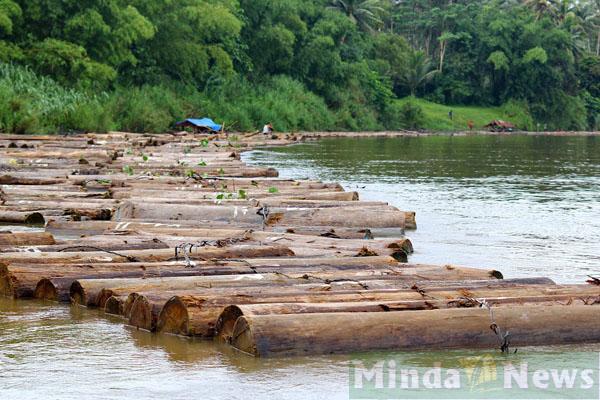
 MANILA, Philippines—The government is now focusing its crackdown on illegal logging in six provinces in Mindanao where loggers still reign in “connivance” with local, environment and police officials.
Antilogging officials on Friday pinpointed Agusan del Sur, Agusan del Norte and Surigao del Sur in Region 13 or Caraga Region, and Compostela Valley, Davao del Norte and Davao Oriental in Region 11  as “hot spots” where illegal logging has thrived more than a year after President Benigno Aquino III banned logging nationwide.
“Caraga and the Davao peninsula are the corridors [of illegal logging],” said retired Gen. Renato Miranda, chief of the Illegal Logging Task Force whose headquarters was transferred to
Butuan, Agusan del Sur last week to eliminate logging at its source on Mr. Aquino’s orders.

Enforcement problems
Environment Secretary Ramon Paje admitted having a tough time enforcing Mr. Aquino’s Executive Order No. 23, which bans logging nationwide, on the six provinces because of the connivance of illegal loggers with local government executives, environment field personnel, and police officials.
“We’re now focusing on six major problematic provinces. They’re the remaining provinces where we have not contained logging because of connivance among local officials, DENR field personnel, police and other regulators,” he said.
Interior Secretary Jesse Robredo said five mayors were now being investigated while eight police officials in Caraga were suspended for alleged involvement in illegal logging.
Philippine National Police Director Nicanor Bartolome had also expanded the one-strike policy to include police commanders, who would be relieved if they fail to confiscate illegal logs.
With Mr. Aquino taking a direct hand in the campaign, the departments of environment, interior, police, customs and law enforcement agencies, have mobilized all their resources to the six provinces.
Friday morning, a multi-agency team seized 18 container vans of lumber at the Davao port, Paje said, a week after 55 container vans of lumber at the Manila North Harbor, also from Davao, were confiscated.
“The President had wanted this stopped yesterday,” said
Paje, who relieved 31 key officials in Regions 11 and 13 last Saturday for failing to curb illegal logging.
Paje has personally tapped Assistant Secretary Marlo Mendoza, coordinator of the National Greening Program, to replace the relieved regional director in Region 13, and oversee the crackdown on illegal logging in the region. Paje said he would oversee the NGP in the meantime.
New Region 11 director
“We need a very credible person to implement this program,” he said of Mendoza, who headed Bantay Kalikasan for five years.
Paje also designated Mark Fragada as the new Region 11 director, crediting him for the seizure of the lumber in Davao port Friday.
“The major strategy is to have a laser-focused attention on these areas. I’m with the President in stopping this as fast as possible,” he said. “With new people on the ground, we’re optimistic we’ll be able to neutralize illegal logging.”
The strategy would be two-pronged: continuing operations against the loggers, and livelihood for log cutters through the DENR’s reforestation program, according to Paje and Miranda. PDI

Sunday, July 1, 2012

TAMPAKAN SAGITTARIUS MINES, NATIONAL GREENING PROGRAM AND SAVING PHILIPPINE FORESTS


Apart from community-based programs under their Corporate Social Responsibility, the most tangible evidence of mining companies complying with rules and regulations on environmental protection under the Philippine Mining Act of 1995 is their programs on reforestation.


The mining act mandates that mining companies must replace if not restore vegetation destroyed in the process of the mining operation.

The Sagittarius Mines Inc. (SMI) behind the US$55 million Tampakan Gold-Copper Project in South Cotabato, is among those closely watched by government on compliance with environmental protection.
But the Department of Ennvironment and Natural Resources (DENR) may not be having headaches in monitoring SMI.
Even before it could start operation in 2016, SMI, with a 10,000-hectare concession that straddles South Cotabato, Sultan Kudarat and Davao del Sur, already has set into place a massive and continuing regreening program started as early as 2008.

Tree-planting activities, in the concession area and extending to areas adjacent to it, are ongoing being implemented by SMI and backstopped by peoples organizations, NGOs, socio-civic clubs, schools, corporate entities, Church groups, local overnment units and other sectors who are pursuing their own respective reforestation and tree planting projects and provided by SMI with seedlings and other planting materials.

South Cotabato is a victim of uncontrolled illegal logging in the past, and illegal mining in the present, and has lost nearly all of its forest covers. The SMI greening program is helping it restore lost forests.
As what is happening everywhere, the people of South Cotabato are aware of global warming and how depleted forests had contrubuted to it, and are willing to help over-all efforts to help solve the climatic crisis placing Mother Earth in grave danger.
SMI with its resources may have come as an angel helping in the mission, at least in South Cotabato and its environs, to arrest global warming through its corporate reforestation program and linkages with various groups in the tree planting campaign.

The DENR has acknowledged that mining companies have resources to engage in massive reforestation, not only as part of their compliance with the
Philippine Mining Act, but also as an important partner in the National Greening Program (NGP).
This is the reason why DENR has entered into memorandum of agreements with mining companies foremost of which is the SMI as important partners of the government in the implementation of the NGP.
For its part, SMI has pushed the antes further as far as the greening program is concerned by entering into partnerships with local government units in Region Eleven and Region Twelve in the collaborative effort of successfully implementing the NGP.
Unlike before the mining act of 1995 when mining companies were not mandated to embed reforestation programs in their operations, the mining companies of today are forced to adopt responsible mining as the barometer of how deserving they are of the permits given them by the government.
The “sins of the past” of mining companies–massive floods, forest denudation and other threats to environment and people—are now being addressed by the Philippine Mining Act that imposes responsible mining as the mantra that should govern mining operations that must balance environmental protection with economic activities.

It is with high hopes mining companies would play an important role in the NGP that is targeting about 500,000 hectares for tree planting in the period 2012 to 2016.
The DENR projects the Philippines would have more green forest areas than deforested ones if NGP meets its 2016 goal of planting some 1.5 billion tree seedlings in about 1.5 million hectares of open, denuded and degraded forest land nationwide.
Philippine areas designated as forests account for about half of the country’s estimated total land area of some 30 million hectares.
Studies show that deforestation reduced the country’s forest cover from over 50 percent of land at the 20th century’s start to only about 24 percent at present. ROGER M. BALANZA

The Davao City P268 million Sanitary Landfill


By ROGER M. BALANZA


“Our focus on the environment and natural resources will be principally directed on ecological solid waste management, watershed rehabilitation and coastal resource management. We will continue to pursue the path to sustainable development of our city.”

In December last year, Mayor Rodrigo Duterte gave the Dabawenyos the biggest gift of all: the P268-million ultra-modern Sanitary Landfill in Barangay New Carmen, Tugbok district.

Built on a 3.8-hectare property, the landfill, in compliance with Republic Act 9003 or the Ecological Solid Waste Management Act of 2000, have a capacity of 1.2 metric tons of residual garbage and a life span of eight to ten years.

With the project, Davao City is among few local government units which complied with RA 9003, which poised administrative charges against local officials failing to establish sanitary landfills five years after the approval of RA 9003.

RA 9003 is also known as “An Act Providing for an Ecological Solid Waste Management Program, Creating the Necessary Institutional Mechanisms and Incentives, Declaring Certain Acts Prohibited and Providing Penalties, Appropriating Funds therefore, and for other purposes,” mandates for all LGUs to be at the frontline in the implementation of the mandatory segregation of biodegradable, non-biodegradable and special wastes, recycling and composting and the establishment of a materials recovery facility (MRF).”

The ultimate aim of RA 9003 is to reduce garbage volume starting at home, with the community joining hands in segregation and recycling.

Davao City has long practiced throwing the nearly half a million tons of annual garbage volume churned out by its 1.4 million inhabitants into open dumpsites which is now outlawed by RA 9003.

In compliance with RA 9003, the landfill operates through the principle of waste segregation starting from the homes to the site to reduce waste to a few tons of residual waste.

At the landfill, engineering designs prevent lecheate from seeping into water tables, thus protect the city’s water resources.

Recycling transforms residual waste into bricks and tiles. Chemicals convert soft garbage through the process of decomposition using biologically-friendly processes to produce solid, liquid, and gaseous products.

The operation of the Sanitary Landfill as provided in the city’s Ecological Solid Waste Management Program has four components: public awareness campaign; waste segregation into biodegradable, recyclable, and residual components; recycling and composting of recyclable and biodegradable components; and landfilling of residual solid waste.

While the last is in full operation, sanitary personnel have yet to set into place the three others, particularly on the manner of segregation at the homes.

Nevertheless, the education, information campaign tapping barangays which are given responsibility to be active players in the solid waste management program are on stream. Some barangays have institutionalized the Materials Recovery Facility (MRF), also mandated by RA 9003, which is the second step to recycling at home to reduce residual waste destined for the Sanitary Landfill.

The 3.8-hectare facility meets the standards of the National Solid Management Waste Commission Technical Guidelines for Sanitary Landfill Design and Operation.

It was designed by IPM Construction and Development Corporation and conforms to international standards on sanitary landfills, with lycheate retention pond, monitoring wells, drainage system, and gas vents. Mayor Duterte admitted garbage disposal is a major problem and the Sanitary Landfill is in reponse to this concern.

Mayor Duterte said a major focus of his administration is the preservation of the environment and public health through ecological solid waste management, watershed rehabilitation and coastal resource management.

The buck however does not stop at the Sanitary Landfill, whose three support components are still to be perfected.

“We will continue to pursue the path to sustainable development of our city,” Duterte said.